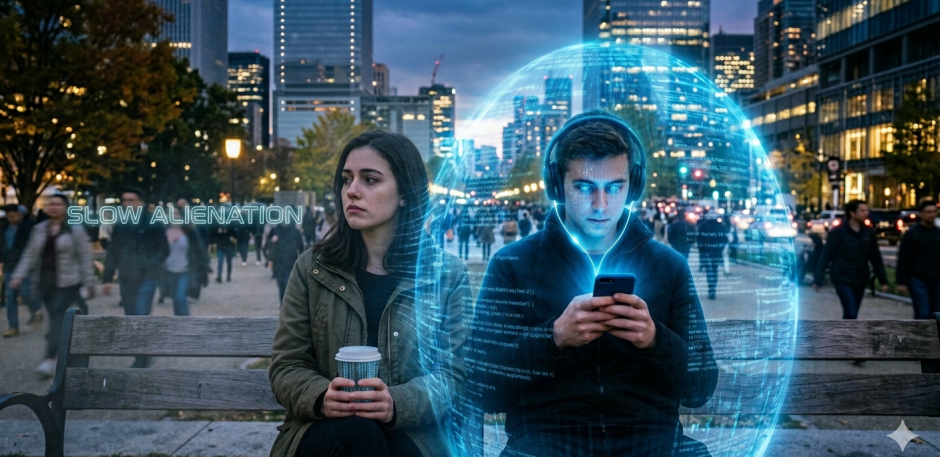
Permanent Isolation: Why Do Overly Stiff Routines Trigger Hidden Depression?

When Structure Becomes a Cage Instead of Support

Routines are often praised as the backbone of productivity and stability. A well-structured day helps people stay focused, reduce stress, and maintain control over their responsibilities. Morning rituals, scheduled work blocks, meal planning, and disciplined habits are frequently associated with success and mental clarity.

But there is a lesser-known side to extreme structure.

When routines become too rigid, too repetitive, and too emotionally disconnected from life outside of obligations, they can quietly shift from helpful organization into a form of permanent isolation.

This is where structure stops supporting life—and starts replacing it.

And in that replacement, a hidden form of depression can begin to grow.

What Is Permanent Isolation?

Permanent isolation does not always mean physical solitude.

Instead, it describes a psychological state where a person’s life becomes so structured and predictable that emotional variety, social spontaneity, and meaningful engagement slowly disappear.

People experiencing this may:

  • Follow strict daily schedules with little variation
  • Avoid spontaneous social interaction
  • Prioritize productivity over connection
  • Repeat the same environments, routes, and routines
  • Feel emotionally “flat” despite being functional

On the surface, life appears stable.

Internally, it can feel increasingly empty.

The Hidden Link Between Routine and Emotional Numbness

Routines are designed to reduce uncertainty. They create order in chaotic environments and help conserve mental energy.

However, when routines become overly rigid, they can reduce the brain’s exposure to novelty—one of the key drivers of emotional engagement.

Human psychology thrives on variation:

  • New experiences stimulate motivation
  • Social interactions create emotional resonance
  • Unexpected events generate meaning and memory
  • Flexibility encourages adaptability and curiosity

When these elements are minimized for long periods, emotional responsiveness can weaken.

Life becomes efficient—but less emotionally alive.

Why Overly Structured Lives Can Feel Empty

A strictly organized lifestyle can unintentionally remove the “friction” that creates human connection.

For example:

  • Working from home every day reduces casual social encounters
  • Strict schedules leave little room for spontaneous meetings
  • Repetitive environments limit new emotional stimuli
  • Digital communication replaces in-person interaction

While none of these are inherently harmful, their combination can gradually shrink a person’s emotional world.

Over time, life may begin to feel like a loop rather than an experience.

The Psychology of “Functional but Disconnected”

One of the most confusing aspects of hidden depression is that people often remain highly functional.

They may:

  • Complete tasks efficiently
  • Maintain careers and responsibilities
  • Follow routines consistently
  • Appear stable from the outside

Yet internally, they may experience:

  • Emotional flatness
  • Lack of excitement or anticipation
  • Reduced interest in social life
  • Feeling “stuck” or on autopilot
  • Difficulty experiencing joy

This is sometimes described as emotional disconnection within functionality—when life continues to operate smoothly, but without emotional depth.

Why Routine Alone Cannot Sustain Mental Health

Routine is a tool, not a complete emotional system.

It provides:

  • Predictability
  • Stability
  • Time management
  • Reduced cognitive overload

But it does not inherently provide:

  • Meaningful relationships
  • Emotional stimulation
  • Social belonging
  • Novel experiences
  • Psychological renewal

When routine dominates without balance, emotional needs can go unmet—even if practical needs are fully satisfied.

The Role of Social Isolation Inside Routine

Highly structured lifestyles often reduce unplanned social contact.

This includes:

  • Casual conversations during commutes
  • Spontaneous workplace interactions
  • Community participation
  • Informal gatherings
  • Everyday social unpredictability

These interactions may seem minor, but they play a major role in emotional health.

They remind individuals that they are part of a living, responsive social environment.

Without them, routine can become isolating even in busy or populated settings.

The Brain’s Need for Variation and Connection

Human brains are wired to respond to change and connection.

When life becomes too predictable, the brain receives fewer emotional “signals” that contribute to motivation and engagement.

Over time, this can contribute to:

  • Reduced dopamine response to daily activities
  • Decreased curiosity and motivation
  • Emotional fatigue or numbness
  • Lowered sense of meaning in daily life

This is not a failure of discipline—it is a natural response to low stimulation environments.

When Productivity Replaces Presence

One of the key risks of rigid routines is that productivity can become a substitute for presence.

People may become focused on:

  • Checking tasks off lists
  • Maintaining strict schedules
  • Optimizing efficiency
  • Avoiding “unproductive” time

But unstructured time is often where emotional life develops.

It is in pauses, conversations, and spontaneous moments that people reconnect with themselves and others.

Without these spaces, life can feel overly mechanical.

Why Hidden Depression Is Hard to Recognize

Hidden depression in structured lifestyles is often difficult to identify because there is no visible collapse in function.

Instead, it appears as:

  • Subtle dissatisfaction
  • Reduced emotional intensity
  • A sense of routine fatigue
  • Lack of excitement about the future
  • Feeling “fine but not fulfilled”

Because daily life continues smoothly, the emotional cost is often overlooked or dismissed.

This makes awareness especially important.

Restoring Emotional Balance Without Losing Structure

The solution is not to abandon routines entirely.

Structure is valuable and often necessary for stability and success.

The key is introducing flexibility and emotional variety back into daily life.

This can include:

  • Allowing unplanned time in the schedule
  • Introducing new environments or activities
  • Prioritizing face-to-face social interactions
  • Engaging in hobbies outside productivity goals
  • Taking breaks from digital routines
  • Saying yes to spontaneous opportunities

Small disruptions to routine can reintroduce emotional vitality.

Reconnecting with a More Human Pace of Life

Modern life often encourages optimization, efficiency, and control.

But emotional health depends on more than structure.

It depends on:

  • Unpredictability
  • Connection
  • Playfulness
  • Rest
  • Shared experiences

A healthy life rhythm balances discipline with spontaneity.

Too much structure can shrink emotional space.

Balanced structure allows life to remain both stable and meaningful.

The Comfort Trap: Exploring the Fine Line Between Enjoying Tranquility and Being Trapped in Isolation

When Peace Becomes Too Quiet

Modern life has made comfort more accessible than ever before.

We live in homes designed for convenience, surrounded by technologies that reduce effort, and supported by systems that deliver nearly everything we need directly to our doors. Peace and tranquility are no longer rare luxuries—they are everyday experiences.

But an important question is emerging in today’s world:

When does comfort stop being healing—and start becoming isolating?

This is the essence of what can be called The Comfort Trap—a subtle lifestyle shift where tranquility turns into emotional distance, and solitude slowly transforms into social disconnection.

It is not loud or obvious. It does not happen overnight. Instead, it develops quietly through repeated choices that prioritize ease over engagement.

Understanding the Comfort Trap

The comfort trap is not about rejecting comfort itself.

Comfort is essential for mental health, recovery, and well-being. It allows people to rest, recharge, and feel safe in their environments.

However, problems arise when comfort begins to replace connection.

In the comfort trap, individuals gradually:

  • Spend more time alone indoors
  • Reduce face-to-face interactions
  • Rely heavily on digital communication
  • Avoid unnecessary social exposure
  • Replace community activities with private routines

What begins as peaceful solitude can slowly evolve into emotional isolation.

The line between “enjoying quiet” and “being disconnected” becomes increasingly blurred.

The Rise of Silent Lifestyles

Modern technology and lifestyle changes have made it easier than ever to live a quiet, self-contained life.

Today, many people can:

  • Work remotely from home
  • Order groceries and meals online
  • Stream entertainment endlessly
  • Shop without leaving the house
  • Communicate through messaging apps
  • Access services without direct interaction

These conveniences create an environment where daily life requires minimal social effort.

While this can be beneficial in moderation, it also reduces the number of spontaneous human interactions that naturally occur in shared spaces.

Over time, silence becomes routine rather than occasional.

Why Tranquility Can Turn Into Isolation

Tranquility is often seen as a positive state—calm, peaceful, and stress-free.

But tranquility without balance can become emotionally restrictive.

Human beings are social by nature. Even introverted individuals need a degree of connection to feel grounded in the world around them.

When life becomes too quiet for too long, several subtle changes may occur:

  • Social confidence decreases
  • Motivation to engage with others declines
  • Emotional energy becomes inward-focused
  • Community participation weakens
  • Feelings of detachment increase

The result is a paradox: a life that feels peaceful on the surface but increasingly empty underneath.

The Disappearance of Everyday Interaction

One of the key contributors to the comfort trap is the loss of small, everyday interactions.

These include:

  • Greeting neighbors
  • Talking to cashiers or baristas
  • Casual workplace conversations
  • Brief exchanges in public spaces
  • Unplanned social encounters

These interactions may seem minor, but they play a significant role in maintaining social connection.

They remind individuals that they are part of a larger community.

As convenience and digital services replace these moments, people may unintentionally lose the “social glue” that keeps emotional connections alive.

Digital Comfort vs. Emotional Connection

Technology plays a central role in modern comfort.

It allows people to live efficiently, work flexibly, and communicate instantly.

However, digital interaction is not always a substitute for real-world connection.

Messaging, video calls, and social media can maintain contact—but they often lack:

  • Physical presence
  • Emotional depth
  • Spontaneous conversation
  • Shared real-time experiences

Over-reliance on digital comfort can lead to a situation where people feel connected in theory but isolated in practice.

The Psychological Effects of the Comfort Trap

When comfort begins to replace connection, emotional consequences can gradually emerge.

These may include:

  • Subtle feelings of loneliness
  • Reduced sense of belonging
  • Emotional numbness or detachment
  • Decreased motivation for social engagement
  • Increased anxiety in social situations

The most challenging aspect of the comfort trap is its invisibility.

Because life remains stable, safe, and convenient, the emotional cost is often overlooked until it becomes more pronounced.

Why Humans Need More Than Comfort

Comfort addresses physical and environmental needs.

But human fulfillment requires more than physical ease.

People also need:

  • Meaningful relationships
  • Shared experiences
  • Emotional support systems
  • Community involvement
  • A sense of belonging

Without these elements, even the most peaceful lifestyle can begin to feel incomplete.

Comfort alone cannot replace connection.

Finding the Balance Between Peace and Isolation

The goal is not to abandon comfort or tranquility.

Instead, it is to find balance—ensuring that peace does not come at the expense of connection.

Here are practical ways to avoid the comfort trap:

  • Schedule regular in-person social interactions
  • Participate in community events or group activities
  • Take daily walks in shared public spaces
  • Limit excessive screen-based routines
  • Engage in hobbies that involve other people
  • Maintain relationships through consistent effort
  • Say yes to spontaneous invitations

Small actions help maintain the connection between inner peace and outer engagement.

Designing a Healthier Relationship with Comfort

Modern society is increasingly built around convenience.

But future well-being may depend on designing lifestyles that intentionally integrate social interaction into everyday life.

This includes:

  • Walkable neighborhoods
  • Community gathering spaces
  • Hybrid work environments
  • Local social hubs
  • Accessible public areas

When environments encourage connection, comfort and community can coexist rather than compete.

Disappearing Behind Automatic Doors: When Financial Security Severs Emotional Connections

The Success We Dream About—and the Loneliness We Never Expected

For many people, financial success represents freedom.

A larger home. A safer neighborhood. Greater privacy. Better schools. Reliable transportation. The ability to avoid daily stress and enjoy a more comfortable lifestyle.

These goals are often viewed as milestones of achievement—a reward for years of hard work and sacrifice.

Yet an unexpected question is beginning to emerge in modern society:

What happens when the lifestyle designed to protect our comfort gradually disconnects us from the people around us?

Across suburbs, gated communities, and affluent neighborhoods, many individuals are discovering a hidden paradox. As financial security increases, social interaction sometimes decreases. The very comforts that symbolize success can unintentionally create emotional distance from neighbors, communities, and even close relationships.

This phenomenon can be seen every day in a simple, familiar image: a garage door opening, a car disappearing inside, and the door closing again.

The resident is home.

But socially, they may have disappeared.

The Symbolism of the Automatic Door

Automatic garage doors are not the cause of loneliness.

They are simply a powerful symbol of a broader cultural shift.

In previous generations, arriving home often involved walking through a neighborhood, greeting neighbors, spending time on front porches, or engaging in casual conversation.

Today, many people drive directly into private garages and enter their homes without interacting with anyone outside.

The transition from public space to private space happens in seconds.

While convenient, this routine reduces countless opportunities for spontaneous human connection.

Over time, these missed interactions accumulate.

The neighborhood remains occupied, but community gradually becomes invisible.

Financial Security and the Rise of Self-Contained Living

Economic success allows people to create increasingly self-sufficient lifestyles.

Modern households often include:

  • Home offices
  • Entertainment rooms
  • Private gyms
  • Large outdoor spaces
  • Smart home technology
  • Delivery-based shopping services

These conveniences improve quality of life in many ways.

However, they also reduce the need to leave home or participate in community activities.

When nearly every need can be satisfied within private spaces, interaction with the outside world becomes optional rather than necessary.

The result is a lifestyle that prioritizes independence but sometimes sacrifices connection.

Why Comfort Can Lead to Isolation

Comfort is not inherently harmful.

The challenge arises when comfort consistently replaces engagement.

Human relationships often develop through repeated exposure to others in everyday situations.

Waiting in line at a café.

Walking through a neighborhood.

Attending local events.

Visiting community spaces.

Meeting coworkers in person.

These interactions may seem insignificant, but they create familiarity, trust, and social bonds over time.

As convenience eliminates these moments, opportunities for connection decline.

People become more comfortable—but often less connected.

The Hidden Loneliness of Affluent Communities

Loneliness is frequently associated with hardship, but it can also exist in environments of abundance.

Affluent communities often provide:

  • High levels of security
  • Spacious private properties
  • Controlled access
  • Exclusive amenities
  • Strong physical boundaries

These features enhance privacy and comfort.

Yet they can also create social separation.

Residents may live near one another without forming meaningful relationships.

Large homes provide personal space but may reduce shared experiences.

Physical distance is not always the issue.

Emotional distance often is.

In some of the wealthiest neighborhoods, people may know remarkably little about the lives of those living next door.

The Psychology of Quiet Withdrawal

Isolation rarely occurs suddenly.

It develops gradually through routine choices.

A homeowner chooses home entertainment over community events.

Online shopping replaces local businesses.

Remote work replaces workplace interaction.

Food delivery replaces restaurant visits.

Digital communication replaces face-to-face conversation.

Each decision appears rational and efficient.

Collectively, however, these habits reduce social engagement.

Over time, individuals may withdraw from community life without consciously intending to do so.

This quiet withdrawal can create feelings of emptiness despite outward success.

Why Human Connection Still Matters

Financial stability provides important benefits.

It reduces stress, creates opportunities, and improves overall quality of life.

However, money cannot fully satisfy fundamental human needs.

People also require:

  • Belonging
  • Friendship
  • Shared experiences
  • Emotional support
  • Community involvement

These needs are deeply rooted in human nature.

Research consistently shows that strong social relationships contribute significantly to happiness, resilience, and long-term well-being.

Without meaningful connection, even highly successful lifestyles can feel incomplete.

Technology’s Double-Edged Influence

Technology amplifies both convenience and isolation.

Today, people can work, shop, socialize, and entertain themselves without leaving home.

Digital tools offer extraordinary benefits.

The challenge arises when digital convenience becomes a substitute for real-world connection.

A social media feed may create awareness of others without creating genuine relationships.

A virtual meeting may accomplish professional goals without fostering friendship.

A delivery app may save time while eliminating opportunities for community interaction.

Technology connects systems efficiently.

Connecting people requires something more.

Rebuilding Connection in an Age of Privacy

The solution is not abandoning success, technology, or comfort.

The goal is balance.

Individuals can maintain privacy and financial security while remaining connected to their communities.

Practical steps include:

  • Walking through neighborhoods regularly
  • Getting to know neighbors
  • Participating in local events
  • Supporting local businesses
  • Joining clubs and community organizations
  • Hosting gatherings
  • Prioritizing face-to-face interaction

Small actions often create powerful social bonds over time.

Community is not built automatically.

It is built intentionally.

The Future of Prosperous Communities

As societies become wealthier and technology continues to advance, the challenge will be preserving human connection within increasingly private lifestyles.

Future communities must be designed not only for efficiency and security but also for interaction and belonging.

Public spaces, walkable neighborhoods, community programs, and local gathering places all play a crucial role in maintaining social health.

The most successful communities may not be those with the highest walls or largest homes.

Comfortable but Empty: Understanding Quiet Isolation and Its Negative Impact on the Urban Soul

When Modern Comfort Comes at an Unexpected Cost

Cities have never been more advanced.

Smart apartments anticipate our needs. Food arrives within minutes. Entertainment streams endlessly. Remote work allows professionals to build careers without leaving home. Technology has made urban life faster, safer, and more convenient than previous generations could have imagined.

On the surface, modern city living appears to be a remarkable success story.

Yet beneath the convenience and efficiency, a quieter reality is emerging.

Many people are experiencing a form of loneliness that does not look like traditional isolation. They are surrounded by neighbors, coworkers, digital connections, and crowded public spaces, yet they feel emotionally detached from the world around them.

This condition can be described as quiet isolation—a subtle but powerful sense of disconnection hidden beneath a comfortable lifestyle.

And its effects may be reshaping the emotional health of modern cities in ways we are only beginning to understand.

What Is Quiet Isolation?

Quiet isolation differs from obvious loneliness.

A person experiencing traditional isolation may have very little social contact and clearly recognize their situation.

Quiet isolation is more difficult to detect.

People may have:

  • Stable careers
  • Comfortable homes
  • Active social media accounts
  • Regular online communication
  • Busy daily schedules

Yet despite appearing socially connected, they often feel disconnected emotionally.

The problem is not necessarily the absence of interaction.

It is the absence of meaningful connection.

This subtle distinction explains why many people struggle to identify the source of their dissatisfaction despite living seemingly successful lives.

The Rise of Comfortable Loneliness

Modern urban life increasingly prioritizes convenience.

Almost every daily activity can now occur without significant human interaction.

Consider how much has changed:

  • Food delivery replaces neighborhood restaurants.
  • Online shopping replaces local stores.
  • Streaming services replace public entertainment venues.
  • Remote work replaces office communities.
  • Digital communication replaces face-to-face conversations.

Each innovation saves time and reduces effort.

Collectively, however, they remove many of the everyday encounters that once connected people to their communities.

As comfort increases, opportunities for spontaneous human interaction often decrease.

The result is a lifestyle that feels efficient but emotionally incomplete.

Why Cities Feel More Lonely Than Ever

Cities are designed to bring people together.

Millions of individuals share the same streets, transportation systems, workplaces, and public spaces.

Ironically, many urban residents report feeling increasingly isolated.

This contradiction occurs because proximity does not automatically create connection.

Living near people is not the same as knowing them.

Modern urban environments often encourage anonymity. Residents move frequently. Work schedules are demanding. Digital devices compete for attention. Many interactions become brief, transactional, and superficial.

People may encounter hundreds of individuals every day while developing very few meaningful relationships.

This creates an environment where loneliness can thrive even in the middle of a crowd.

The Erosion of Community

Historically, cities depended on strong local communities.

Neighborhood cafés, public parks, local markets, religious institutions, and community organizations served as gathering places where relationships developed naturally.

Many of these social structures still exist, but their influence has weakened.

Increasingly, people spend their free time in private spaces rather than public ones.

Entertainment happens at home.

Shopping happens online.

Communication happens through screens.

As participation in community life declines, the emotional infrastructure of cities begins to weaken.

The city remains physically connected but socially fragmented.

The Psychological Impact on the Urban Soul

Human beings are social creatures.

We do not simply need information, services, and convenience. We also need belonging, recognition, and meaningful relationships.

When those needs are not met, the effects can be profound.

Quiet isolation is often associated with:

  • Increased stress
  • Emotional exhaustion
  • Anxiety
  • Depression
  • Reduced life satisfaction
  • Feelings of emptiness
  • Loss of community identity

The challenge is that these symptoms often develop gradually.

People adapt to increasingly isolated lifestyles without realizing what they have lost.

Over time, comfort can mask a deeper emotional void.

Technology: Connecting Devices, Separating People?

Technology is not the enemy.

Digital tools have improved communication, productivity, education, and access to services in extraordinary ways.

The problem emerges when technology becomes a substitute for human connection rather than a tool that supports it.

A message can replace a conversation.

A video call can replace a visit.

A social media update can replace meaningful engagement.

These substitutions are often efficient, but efficiency is not always emotionally satisfying.

Technology excels at transmitting information.

Human relationships require presence, vulnerability, and shared experiences.

The two are not always interchangeable.

Why Comfort Alone Cannot Sustain Happiness

Modern society often measures success through comfort and convenience.

Larger homes, smarter devices, faster services, and greater efficiency are viewed as signs of progress.

Yet human fulfillment has always depended on more than material comfort.

People need:

  • Friendship
  • Purpose
  • Belonging
  • Shared experiences
  • Community involvement

Without these elements, even highly comfortable lifestyles can feel empty.

The urban soul is nourished not only by what we consume but by how we connect with others.

This is why many individuals who appear successful from the outside still struggle with feelings of loneliness and emotional dissatisfaction.

Rebuilding Human Connection in Modern Cities

The solution is not rejecting technology or abandoning urban living.

Instead, it involves intentionally rebuilding opportunities for meaningful connection.

Practical strategies include:

  • Spending more time in community spaces
  • Participating in local events
  • Supporting neighborhood businesses
  • Limiting passive screen time
  • Prioritizing face-to-face conversations
  • Joining clubs, volunteer groups, or community organizations
  • Building stronger relationships with neighbors

Small interactions often lead to deeper connections over time.

The goal is not simply to be around people but to engage with them.

The Future of Urban Well-Being

As cities continue to evolve, policymakers, planners, and residents face an important challenge.

Future urban success should not be measured solely by technological advancement or economic growth.

It should also be measured by the strength of human relationships.

The healthiest cities will be those that balance innovation with community, efficiency with belonging, and convenience with connection.

Because ultimately, thriving cities are not built only with infrastructure.

They are built with relationships.

Understanding the Suburban Oblivion Phenomenon

How Modern Comfort Is Quietly Disconnecting Communities

For generations, suburbia has represented the ideal lifestyle. Spacious homes, peaceful streets, private yards, good schools, and a safe environment have made suburban living the dream destination for millions of families around the world.

At first glance, suburban life appears to offer everything people need for happiness and security.

Yet beneath the image of comfort and stability, a growing social phenomenon is emerging—one that many residents experience without even realizing it.

It can be called Suburban Oblivion: a gradual state of social disengagement where individuals become increasingly disconnected from their communities while remaining physically surrounded by them.

Unlike loneliness caused by physical isolation, suburban oblivion develops quietly through modern conveniences, private lifestyles, and the slow disappearance of everyday social interaction.

What Is the Suburban Oblivion Phenomenon?

Suburban oblivion is not a medical condition or a formal psychological diagnosis.

Rather, it is a social concept describing a lifestyle pattern in which people become detached from their local communities despite living in densely populated residential areas.

The phenomenon occurs when:

  • Residents know few of their neighbors
  • Community participation declines
  • Daily activities happen primarily indoors
  • Technology replaces face-to-face interaction
  • Convenience reduces opportunities for social engagement
  • Private spaces become more important than shared spaces

Over time, people may become increasingly unaware of the social life around them.

The neighborhood remains occupied, but community gradually fades.

The Evolution of Suburban Living

When suburban neighborhoods first gained popularity, they were often designed around social interaction.

Children played outside together.

Families gathered on front porches.

Neighbors exchanged conversations while gardening, walking, or attending local events.

Community relationships developed naturally through repeated interaction.

Today’s suburban environment often functions differently.

Modern residential developments increasingly emphasize:

  • Privacy
  • Security
  • Personal space
  • Self-sufficiency
  • Individual convenience

While these qualities improve comfort, they may also reduce the frequency of everyday human connection.

The result is a more comfortable lifestyle that is often less communal.

The Rise of the Self-Contained Household

One of the driving forces behind suburban oblivion is the evolution of the modern home itself.

Today’s homes are designed to meet nearly every need without requiring residents to leave their property.

Many households now include:

  • Home offices
  • Entertainment rooms
  • Private gyms
  • Outdoor recreation spaces
  • Smart home technology
  • Delivery-based shopping services

These conveniences create a highly self-sufficient lifestyle.

The less people need to engage with the outside world, however, the fewer opportunities they have to build relationships within their communities.

What appears to be independence can gradually become social separation.

Why Neighbors Are Becoming Strangers

One of the clearest signs of suburban oblivion is the weakening relationship between neighbors.

In many communities, residents live side by side for years without developing meaningful connections.

Several factors contribute to this trend:

Automatic Living

Garage doors open automatically. Residents drive directly into their homes and disappear indoors without interacting with anyone nearby.

Digital Communication

People increasingly communicate online rather than face-to-face, reducing opportunities for local relationship-building.

Busy Schedules

Long work hours, family responsibilities, and digital entertainment leave little time for neighborhood engagement.

Privacy Culture

Many individuals value privacy so highly that casual social interaction is often viewed as unnecessary or intrusive.

Collectively, these factors transform neighborhoods into collections of private households rather than interconnected communities.

The Role of Technology

Technology plays a significant role in accelerating suburban oblivion.

Modern digital tools offer remarkable convenience:

  • Food delivery services
  • Remote work platforms
  • Streaming entertainment
  • Online shopping
  • Virtual communication

These innovations save time and increase efficiency.

However, they also reduce many of the small social interactions that historically connected people to their local environments.

A trip to the grocery store once involved encounters with neighbors, employees, and community members.

Today, groceries may simply appear at the front door.

While convenient, these changes reduce opportunities for spontaneous social connection.

The Psychological Impact of Community Disconnection

Humans are naturally social beings.

Even people who value independence benefit from a sense of belonging and social connection.

When community engagement declines, individuals may experience:

  • Increased loneliness
  • Lower life satisfaction
  • Reduced trust in others
  • Feelings of social disconnection
  • Greater emotional stress

The challenge is that suburban oblivion often develops gradually.

Many residents may not recognize the effects until they realize they feel disconnected despite living in a populated neighborhood.

The absence of conflict or discomfort can mask the absence of meaningful connection.

Why Comfort Alone Is Not Enough

Modern suburban life excels at delivering comfort.

Comfort, however, is not the same as fulfillment.

A large home can provide privacy.

A secure neighborhood can provide safety.

Technology can provide convenience.

But none of these things automatically create belonging.

People thrive not only because their needs are met but because they feel connected to something larger than themselves.

Communities provide support, identity, friendship, and shared experiences that individual comfort cannot replace.

How to Avoid Falling into Suburban Oblivion

The good news is that suburban oblivion is not inevitable.

Residents can actively strengthen community ties through intentional action.

Simple strategies include:

  • Introducing yourself to neighbors
  • Participating in local events
  • Walking through the neighborhood regularly
  • Supporting local businesses
  • Joining community organizations
  • Hosting gatherings or block parties
  • Spending less time isolated indoors

Small interactions often become the foundation of meaningful relationships.

Community grows through participation.

The Future of Suburban Communities

As technology continues to advance and homes become increasingly self-sufficient, the challenge for future communities will be maintaining human connection.

Developers, urban planners, and local leaders are beginning to recognize the importance of designing neighborhoods that encourage interaction.

Walkable streets, shared public spaces, parks, community centers, and local events all help strengthen social bonds.

The most successful suburbs of the future may not be those with the largest homes or the most advanced technology.

They may be the ones that make it easiest for people to connect.

High Fence Syndrome: When Privacy Turns into Slow Isolation

The Hidden Cost of Living Behind Walls

Privacy has become one of the most desirable luxuries of modern life.

From gated communities and high perimeter walls to private gardens and smart security systems, homeowners increasingly seek protection from noise, intrusion, and unwanted attention. In a fast-paced world filled with constant connectivity, having a personal sanctuary seems like the ultimate achievement.

But what happens when the walls we build for protection begin separating us from the people around us?

As neighborhoods become more private and homes more self-contained, many communities are experiencing a subtle but significant social shift. The pursuit of privacy, while valuable, may also be contributing to a growing sense of isolation.

This phenomenon can be described as High Fence Syndrome—a modern lifestyle pattern where increasing privacy gradually reduces human connection, community engagement, and social belonging.

Why Privacy Has Become a Modern Obsession

There are understandable reasons why people value privacy.

Urban density, rising noise levels, security concerns, and the pressures of modern life have led many individuals to prioritize personal space more than ever before.

Today’s homeowners often invest in:

  • High perimeter fences
  • Gated residential communities
  • Private outdoor spaces
  • Smart security systems
  • Contactless services
  • Remote work setups

These features offer comfort, safety, and control over one’s environment.

However, they also reduce opportunities for spontaneous interaction with neighbors and the broader community.

What begins as a practical decision can slowly reshape how people experience daily life.

The Disappearing Neighborhood

Not long ago, neighborhoods functioned as natural social networks.

Children played together outdoors. Neighbors chatted across front yards. People recognized familiar faces during evening walks. Community events and shared public spaces encouraged interaction.

Today, many residential areas look very different.

Tall fences obscure homes from view. Automatic gates limit access. Backyards replace front porches. Residents often enter their garages and disappear indoors without interacting with anyone nearby.

The result is a neighborhood where people live close together physically but remain distant socially.

Community visibility declines, and with it, many opportunities for connection.

When Safety Becomes Separation

Security is one of the strongest motivations behind modern residential design.

Families naturally want to protect their homes and loved ones. High fences, surveillance systems, and controlled-access communities can provide peace of mind.

Yet there is a paradox at play.

Historically, one of the strongest forms of neighborhood security was social familiarity. People knew their neighbors, recognized unusual activity, and looked out for one another.

As communities become more isolated, that social awareness often weakens.

Residents may feel protected by physical barriers while simultaneously losing the social bonds that contribute to a resilient community.

In other words, stronger walls do not always create stronger neighborhoods.

The Psychology of Invisible Isolation

Isolation rarely happens overnight.

It develops gradually.

A homeowner spends more time indoors. Deliveries replace shopping trips. Entertainment shifts to streaming platforms. Remote work reduces commuting and workplace interactions.

At the same time, physical barriers limit casual encounters with neighbors.

None of these changes seem significant individually.

Collectively, however, they reduce the frequency of everyday human interaction.

Over months and years, people may discover they know fewer neighbors, participate less in community life, and feel increasingly disconnected from the environment around them.

This is the essence of High Fence Syndrome: isolation that emerges not from exclusion but from excessive separation.

The Role of Modern Technology

Technology has amplified this trend.

Today, homeowners can manage nearly every aspect of life without leaving their property.

Food arrives through delivery apps. Packages appear at the doorstep. Smart devices automate household tasks. Virtual meetings replace office interactions. Entertainment streams endlessly from home.

These innovations save time and increase convenience.

Yet they also reduce the need to engage with local communities.

Technology is not inherently harmful. The challenge arises when convenience consistently replaces opportunities for meaningful human connection.

The more self-sufficient our homes become, the easier it becomes to live within a personal bubble.

Why Human Connection Still Matters

Humans are inherently social creatures.

Regardless of personality type, people benefit from belonging to a community and maintaining meaningful relationships.

Research consistently links strong social connections to:

  • Better mental health
  • Greater life satisfaction
  • Lower stress levels
  • Increased resilience during difficult times
  • Improved physical well-being

Conversely, prolonged social isolation is associated with loneliness, anxiety, depression, and reduced quality of life.

A private home can provide comfort, but it cannot fully replace the emotional value of human relationships.

Finding the Balance Between Privacy and Community

The solution is not eliminating privacy.

Privacy remains essential for personal well-being, safety, and peace of mind.

The challenge is finding a healthy balance between private space and social connection.

Homeowners can maintain privacy while strengthening community ties by:

  • Greeting neighbors regularly
  • Participating in local events
  • Taking walks through the neighborhood
  • Supporting local businesses
  • Hosting occasional gatherings
  • Using shared community spaces
  • Building relationships beyond digital interactions

Small actions can have a significant impact on rebuilding a sense of belonging.

Designing Communities for Connection

Urban planners, architects, and developers also play an important role.

Neighborhoods that encourage interaction often include:

  • Walkable streets
  • Public parks
  • Community centers
  • Shared recreational spaces
  • Pedestrian-friendly design
  • Accessible gathering areas

These features create opportunities for residents to meet naturally without sacrificing privacy.

The most successful communities are not those with the highest walls but those that balance security with social engagement.

Behind Digital Convenience: Why Do We Feel Increasingly Isolated in the Crowd?

Connected to Everything, Close to No One?

Never in human history have people been more connected than they are today. Smartphones keep us online 24 hours a day. Social media platforms allow us to interact with thousands of people instantly. Food, transportation, entertainment, shopping, and even healthcare can be accessed with a few taps on a screen.

By every technological measure, modern life should feel more connected.

Yet a growing number of people report the opposite experience: loneliness, social disconnection, and a persistent feeling of isolation.

This contradiction raises an important question: Why do we feel increasingly isolated in a world designed to keep us connected?

The answer may lie in the hidden consequences of digital convenience—a force that is reshaping how we communicate, socialize, and experience community in the modern age.

The Age of Effortless Living

Digital technology has transformed nearly every aspect of daily life.

Today, we can:

  • Order groceries without visiting a store
  • Work without leaving home
  • Watch movies without going to theaters
  • Meet virtually without gathering physically
  • Shop globally without entering a mall
  • Learn online without attending classrooms

These innovations have undoubtedly improved efficiency and accessibility.

However, they have also removed many of the everyday interactions that once connected people to their communities.

The casual conversations with shopkeepers, coworkers, neighbors, and fellow commuters may have seemed insignificant at the time, but collectively they formed the social fabric of everyday life.

As convenience increases, those interactions become increasingly rare.

The Crowded Loneliness Phenomenon

One of the most striking features of modern society is that loneliness often exists in places filled with people.

Walk through a busy city center, a crowded train station, or a packed shopping district and you’ll see thousands of individuals sharing the same space.

Yet many feel emotionally disconnected.

This phenomenon is sometimes called “crowded loneliness”—the experience of being physically surrounded by people while feeling socially isolated.

Technology contributes to this dynamic by encouraging people to engage with their devices rather than the people around them.

In public spaces, attention is often directed toward screens rather than human interaction.

The crowd remains present, but genuine connection becomes increasingly absent.

Social Media and the Illusion of Belonging

Social media platforms were created to help people stay connected.

In many ways, they succeed.

People can communicate across continents, reconnect with old friends, and maintain relationships despite geographical distance.

However, social media also creates an illusion of social fulfillment.

A person may have hundreds or thousands of online connections while lacking meaningful relationships in their daily life.

Likes, shares, comments, and follower counts can provide temporary validation, but they do not necessarily satisfy deeper emotional needs such as trust, companionship, and belonging.

As a result, many individuals experience a paradoxical form of loneliness despite constant online engagement.

Convenience Is Replacing Human Interaction

Digital convenience is often designed to reduce friction.

The goal is simple: make every task faster, easier, and more efficient.

Yet friction is not always negative.

Historically, many social relationships emerged through the small inconveniences of daily life.

Waiting in line, commuting to work, visiting local stores, attending community events, and participating in public activities all created opportunities for spontaneous interaction.

Today, many of these experiences have been streamlined or eliminated.

The outcome is a society where efficiency increases while opportunities for connection decrease.

Remote Living and the Shrinking Social Circle

The rise of remote work has further accelerated social isolation.

Working from home offers flexibility, convenience, and improved work-life balance for many professionals.

However, it also reduces informal workplace interactions that contribute to emotional well-being.

Conversations over coffee, collaborative discussions, shared lunches, and workplace friendships often disappear in fully remote environments.

Over time, social circles can shrink dramatically.

People may interact with fewer individuals than ever before while spending more time online than ever before.

The Psychological Cost of Hyper-Connectivity

Human beings evolved as social creatures.

Our emotional health depends not only on communication but also on meaningful social bonds.

Research consistently links chronic loneliness with:

  • Increased anxiety
  • Higher levels of stress
  • Depression
  • Reduced life satisfaction
  • Poorer physical health outcomes
  • Increased risk of social withdrawal

Ironically, these challenges are emerging during an era often described as the most connected period in human history.

The issue is not a lack of communication tools.

It is the growing gap between communication and genuine connection.

Why Technology Alone Cannot Solve Loneliness

Technology excels at delivering information.

It struggles to replicate human presence.

A video call cannot fully replace shared experiences. A text message cannot entirely substitute for face-to-face conversation. Online interactions often lack the emotional cues, body language, and spontaneity that strengthen relationships.

Digital platforms are valuable tools, but they are most effective when they support real-world connections rather than replace them.

The challenge for modern society is ensuring that convenience enhances human relationships instead of gradually eroding them.

Rebuilding Connection in the Digital Age

The solution is not abandoning technology.

Digital tools have transformed lives for the better and remain essential to modern society.

Instead, individuals must intentionally create opportunities for meaningful interaction.

Practical approaches include:

  • Prioritizing face-to-face conversations
  • Participating in community events
  • Joining local groups and organizations
  • Supporting neighborhood businesses
  • Limiting excessive screen time
  • Creating technology-free social moments
  • Investing in deeper relationships rather than larger online networks

When a Luxury Home Becomes a Silent Prison: The Reality of Today’s Suburban Oblivion

Bigger Houses, Smaller Lives?

For decades, the suburban dream has been sold as the ultimate symbol of success. A spacious house, a manicured lawn, a private garage, and a peaceful neighborhood away from the noise of the city—these have long represented achievement, security, and comfort.

Today, that dream is larger than ever.

Modern suburban homes boast home theaters, private gyms, smart automation systems, swimming pools, dedicated offices, and entertainment spaces that previous generations could scarcely imagine. Yet despite all these luxuries, an uncomfortable question is emerging:

What happens when a home becomes so self-sufficient that it no longer requires us to engage with the outside world?

For many homeowners, the answer is surprising. The dream home they worked so hard to acquire can gradually transform into a silent prison—comfortable, secure, and isolated.

The Evolution of the Suburban Dream

The original appeal of suburbia was simple. Families sought safer neighborhoods, larger living spaces, and stronger communities than crowded urban centers could provide.

In earlier decades, suburban life revolved around community interaction. Children played outside together. Neighbors gathered on front porches. Local schools, parks, and businesses served as social hubs.

Today, however, many suburban developments are designed around privacy rather than connection.

High fences, enclosed backyards, private amenities, and digital services allow residents to meet nearly every need without stepping beyond their property line. The result is a lifestyle centered on individual comfort rather than shared experience.

The Rise of the Self-Contained Home

Modern luxury homes are increasingly designed to eliminate inconvenience.

Why go to the gym when you have one downstairs?

Why visit a movie theater when your home includes a private cinema?

Why shop locally when groceries arrive at your doorstep?

Why socialize outdoors when entertainment is available in every room?

Each feature offers undeniable benefits. Yet together they create an environment where leaving home becomes optional rather than necessary.

Over time, this convenience can quietly reduce opportunities for spontaneous social interaction—the small encounters that help build friendships, trust, and a sense of belonging.

Surrounded by Neighbors, Unknown to Them

One of the strangest realities of modern suburban life is that many residents know less about their neighbors than previous generations did.

People may live side by side for years without developing meaningful relationships.

Automatic garage doors open and close within seconds. Residents drive directly into their homes without walking through the neighborhood. Deliveries arrive contact-free. Communication increasingly happens online rather than face-to-face.

The physical distance between neighbors has not increased.

The social distance has.

In many suburban communities, residents experience a paradoxical form of isolation: they are surrounded by people yet remain disconnected from them.

Comfort Is Replacing Community

Modern suburban living often prioritizes convenience over participation.

Community centers are replaced by private recreation rooms.

Public gathering spaces compete with personalized entertainment systems.

Neighborhood interaction gives way to digital engagement.

As homes become more luxurious, the incentives to leave them diminish.

This shift may seem harmless at first, but community is built through repeated interaction. When those interactions disappear, so does the sense of collective belonging that makes neighborhoods feel alive.

The consequence is not simply solitude—it is social fragmentation.

The Psychological Cost of Isolation

Humans are social beings by nature.

While privacy and personal space are important, meaningful relationships remain essential for emotional well-being.

Research consistently links prolonged social isolation with:

  • Increased stress and anxiety
  • Higher rates of depression
  • Reduced life satisfaction
  • Poorer physical health
  • Greater feelings of loneliness

The irony is striking. Many individuals achieve the financial success necessary to purchase their dream home only to discover that material comfort alone does not create fulfillment.

A larger house can provide more space, but it cannot automatically provide connection.

Technology’s Role in Suburban Oblivion

Technology has amplified the self-contained lifestyle.

Smart homes automate daily tasks. Streaming services provide endless entertainment. Food delivery apps eliminate shopping trips. Remote work reduces commuting. Social media creates virtual interaction that often replaces in-person engagement.

Collectively, these innovations make isolation easier than ever before.

The issue is not technology itself. These tools improve efficiency and convenience in countless ways.

The challenge arises when technology replaces community instead of supporting it.

A neighborhood where everyone is digitally connected but socially absent risks becoming a collection of isolated individuals rather than a functioning community.

The Hidden Meaning of “Suburban Oblivion”

Suburban oblivion is not a physical place.

It is a condition.

It occurs when comfort becomes so complete that people gradually lose awareness of the communities around them. Life becomes confined to private spaces, personal routines, and digital interactions.

The outside world continues to exist, but participation in it slowly fades.

The neighborhood becomes a backdrop rather than a community.

The home becomes a sanctuary—but also a boundary.

And without realizing it, residents can drift into a lifestyle defined by convenience but marked by disconnection.

Reclaiming Human Connection

The solution is not to abandon suburban living or reject modern comforts.

Luxury, convenience, and technology are not the enemy.

The key is intentional balance.

Homeowners can strengthen social bonds by:

  • Spending time in shared community spaces
  • Walking through neighborhoods regularly
  • Participating in local events
  • Supporting nearby businesses
  • Building relationships with neighbors
  • Hosting gatherings and social activities
  • Prioritizing face-to-face interactions

Communities thrive when people actively contribute to them.

Even small efforts can transform a neighborhood from a collection of houses into a network of relationships.

The Urban Paradox: Buying Comfort, Getting Loneliness

Why Modern City Life Feels More Isolated Than Ever

Cities have long been symbols of opportunity, innovation, and progress. They offer better jobs, world-class infrastructure, endless entertainment, and access to conveniences that previous generations could only dream of. Luxury apartments, food delivery apps, ride-hailing services, coworking spaces, and smart technologies promise a life of comfort and efficiency.

Yet amid all these advantages, a surprising reality is emerging: many urban residents are lonelier than ever.

This is the urban paradox—people move to cities seeking a better quality of life, only to discover that the comforts they purchase often come with an unexpected cost: social isolation.

The Promise of Urban Comfort

Modern cities are designed to make life easier. Need groceries? They arrive at your door within hours. Want dinner from your favorite restaurant? A few taps on your smartphone make it happen. Need transportation? Ride-sharing services are available around the clock.

Urban living offers convenience at an unprecedented scale.

High-rise apartments provide security, privacy, and amenities such as gyms, swimming pools, and coworking lounges. Smart home devices automate daily routines. Remote work eliminates long commutes. Everything seems optimized for comfort.

On the surface, this appears to be progress. But beneath the convenience lies a growing disconnect from the very communities that once made cities vibrant social ecosystems.

Surrounded by Millions, Connected to Few

One of the greatest ironies of urban life is that loneliness often increases as population density rises.

A person can live in a city of millions and still feel completely alone.

In smaller communities, social interaction is often unavoidable. Neighbors know one another. Local businesses recognize regular customers. Community events create opportunities for meaningful relationships.

In contrast, urban environments frequently encourage anonymity. Residents may share walls with dozens of neighbors without ever exchanging a conversation. People pass each other daily in elevators, trains, and crowded streets while remaining strangers.

The result is a form of social isolation hidden within constant physical proximity.

Convenience Is Replacing Community

Many services that improve efficiency also reduce opportunities for human interaction.

Consider how daily life has changed:

  • Online shopping replaces visits to local stores.
  • Food delivery reduces restaurant interactions.
  • Streaming services replace community entertainment venues.
  • Remote work limits workplace relationships.
  • Self-service technology reduces face-to-face communication.

Individually, these innovations save time. Collectively, they remove many of the casual social encounters that once helped people build connections.

These seemingly small interactions often play a significant role in creating a sense of belonging. Without them, daily life can become increasingly transactional and emotionally distant.

The Luxury of Privacy—and Its Consequences

Privacy is one of the most valued aspects of modern urban living. People invest heavily in gated communities, private transportation, exclusive amenities, and personalized services.

While privacy offers comfort and security, excessive isolation can create emotional challenges.

The modern city increasingly caters to individual lifestyles rather than collective experiences. Residents can exercise, work, shop, eat, and entertain themselves without ever engaging with their broader community.

The outcome is a lifestyle that feels efficient but often lacks meaningful social connection.

Digital Connections, Real Loneliness

Technology has made communication easier than ever. Social media platforms, messaging apps, and virtual communities allow people to stay connected across continents.

However, digital interaction is not always a substitute for genuine human relationships.

Many urban professionals spend hours online while experiencing limited face-to-face engagement. Notifications, likes, and comments can create the appearance of social connection without delivering the emotional depth that comes from shared experiences and meaningful conversations.

As screen time increases, opportunities for authentic human interaction often decline.

The Mental Health Impact

Loneliness is no longer viewed as a personal issue alone—it is increasingly recognized as a significant public health concern.

Research consistently links chronic loneliness to:

  • Increased stress levels
  • Anxiety and depression
  • Reduced emotional well-being
  • Lower life satisfaction
  • Poorer physical health outcomes

Ironically, many individuals who have achieved the urban dream of financial stability and modern comfort still report feeling disconnected from others.

This highlights an important truth: comfort can improve convenience, but it cannot replace human connection.

Rebuilding Community in Modern Cities

The solution is not to abandon cities or reject technological progress. Urban innovation has delivered enormous benefits and continues to improve quality of life.

Instead, the challenge is creating balance between convenience and connection.

Urban residents can strengthen social bonds by:

  • Participating in local events and community programs
  • Supporting neighborhood businesses
  • Joining hobby groups and social clubs
  • Working from shared spaces occasionally
  • Building relationships with neighbors
  • Prioritizing in-person interactions alongside digital communication

City planners and developers also have a role to play by designing public spaces that encourage interaction, collaboration, and community engagement.

The Future of Urban Living

As cities continue to evolve, success should not be measured solely by efficiency, technology, or luxury amenities.

A truly successful city is one that helps people feel connected, supported, and part of something larger than themselves.

The future of urban development must prioritize not only smart infrastructure but also meaningful human relationships. Communities thrive when people have opportunities to meet, interact, and build trust with those around them.

Trapped in Comfort: How Modern Facilities Are Slowly Isolating Us

Never before in human history have we enjoyed so much comfort. With food delivered to our doorsteps, entertainment available at the touch of a button, remote work opportunities, and smart homes that automate daily tasks, modern facilities have transformed the way we live. These innovations save time, increase efficiency, and make life more convenient than ever.

Yet beneath this layer of comfort lies a growing concern: are modern conveniences slowly isolating us from one another?

As society becomes increasingly optimized for personal convenience, many people are experiencing reduced social interaction, weaker community bonds, and a growing sense of loneliness. The very facilities designed to improve our quality of life may be quietly reshaping how we connect with the world around us.

The Rise of a Self-Contained Lifestyle

Modern infrastructure is increasingly designed to minimize effort. Grocery delivery apps eliminate the need to visit local markets. Streaming platforms replace community entertainment venues. Online shopping reduces trips to retail stores. Remote work decreases daily interactions with colleagues.

While each innovation offers clear benefits, together they create a lifestyle where individuals can spend days—or even weeks—without meaningful face-to-face interaction.

In the past, daily activities naturally encouraged social encounters. People met neighbors while shopping, chatted with coworkers in shared offices, and built relationships through community events. Today, many of these opportunities have been replaced by digital alternatives that prioritize speed and convenience over human connection.

Technology and the Illusion of Connection

Social media platforms promise connectivity, yet many users report feeling more isolated despite being constantly online.

Digital communication allows us to maintain contact across distances, but it often lacks the emotional depth of in-person interactions. Likes, comments, and short messages can create an illusion of social engagement while leaving deeper emotional needs unmet.

Studies consistently show that excessive screen time and heavy reliance on digital communication can contribute to feelings of loneliness, anxiety, and social disconnection. While technology connects devices effortlessly, connecting people on a meaningful level remains a far greater challenge.

Smart Cities, Smarter Isolation?

Urban development increasingly focuses on convenience-driven infrastructure. Gated communities, private transportation, self-checkout systems, and automated services all reduce the need for direct human interaction.

Ironically, many modern cities are becoming more crowded while residents feel increasingly alone.

The design of many urban environments prioritizes efficiency over community. Public gathering spaces, neighborhood centers, and local social hubs are often replaced by private, personalized experiences. As a result, people may live physically close to thousands of others while feeling emotionally distant from everyone around them.

Remote Work: Freedom with a Trade-Off

The rise of remote work has revolutionized professional life. Employees enjoy flexibility, reduced commuting time, and improved work-life balance. Businesses benefit from lower operational costs and access to global talent.

However, remote work can also reduce spontaneous social interactions that naturally occur in traditional workplaces.

Casual conversations, shared lunches, brainstorming sessions, and workplace friendships often contribute significantly to mental well-being. When work becomes entirely virtual, employees may struggle to maintain a sense of belonging and community.

For many professionals, the challenge is no longer productivity—it’s preventing social isolation.

The Loneliness Epidemic

Health experts increasingly describe loneliness as a public health concern. Despite unprecedented technological advancement, many individuals report feeling disconnected from friends, family, and their communities.

Modern facilities make independence easier than ever, but independence is not the same as connection.

Human beings are inherently social creatures. We thrive through shared experiences, cooperation, and meaningful relationships. When convenience removes the need for interaction, it can unintentionally weaken the social structures that support emotional health.

The result is a paradox: we have more ways to communicate than ever before, yet many people feel less connected.

Finding Balance in a Convenience-Driven World

The solution is not to reject modern technology or abandon convenient facilities. These innovations have improved countless aspects of life and continue to offer tremendous value.

Instead, the goal is balance.

Individuals can actively create opportunities for genuine human connection by:

  • Participating in local community activities
  • Working occasionally from shared spaces or offices
  • Supporting local businesses
  • Engaging in face-to-face conversations
  • Limiting excessive screen time
  • Building stronger neighborhood relationships