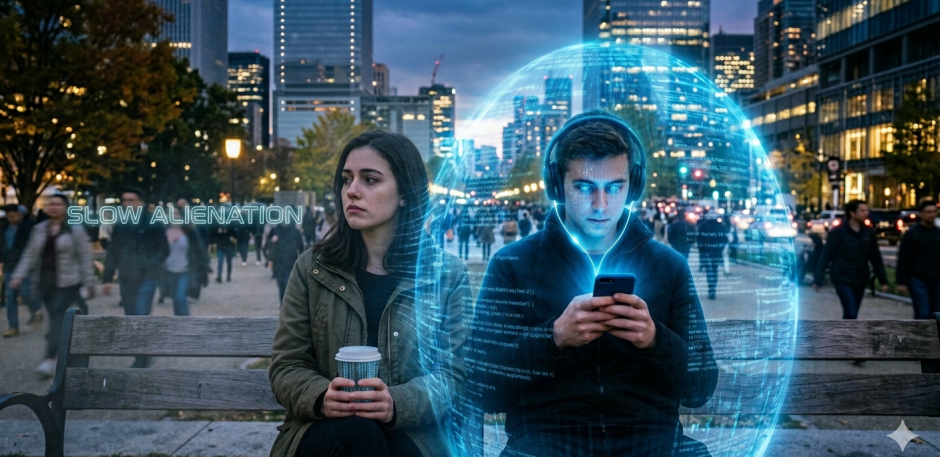
When Peace Becomes Too Quiet
Modern life has made comfort more accessible than ever before.
We live in homes designed for convenience, surrounded by technologies that reduce effort, and supported by systems that deliver nearly everything we need directly to our doors. Peace and tranquility are no longer rare luxuries—they are everyday experiences.
But an important question is emerging in today’s world:
When does comfort stop being healing—and start becoming isolating?
This is the essence of what can be called The Comfort Trap—a subtle lifestyle shift where tranquility turns into emotional distance, and solitude slowly transforms into social disconnection.
It is not loud or obvious. It does not happen overnight. Instead, it develops quietly through repeated choices that prioritize ease over engagement.
Understanding the Comfort Trap
The comfort trap is not about rejecting comfort itself.
Comfort is essential for mental health, recovery, and well-being. It allows people to rest, recharge, and feel safe in their environments.
However, problems arise when comfort begins to replace connection.
In the comfort trap, individuals gradually:
- Spend more time alone indoors
- Reduce face-to-face interactions
- Rely heavily on digital communication
- Avoid unnecessary social exposure
- Replace community activities with private routines
What begins as peaceful solitude can slowly evolve into emotional isolation.
The line between “enjoying quiet” and “being disconnected” becomes increasingly blurred.
The Rise of Silent Lifestyles
Modern technology and lifestyle changes have made it easier than ever to live a quiet, self-contained life.
Today, many people can:
- Work remotely from home
- Order groceries and meals online
- Stream entertainment endlessly
- Shop without leaving the house
- Communicate through messaging apps
- Access services without direct interaction
These conveniences create an environment where daily life requires minimal social effort.
While this can be beneficial in moderation, it also reduces the number of spontaneous human interactions that naturally occur in shared spaces.
Over time, silence becomes routine rather than occasional.
Why Tranquility Can Turn Into Isolation
Tranquility is often seen as a positive state—calm, peaceful, and stress-free.
But tranquility without balance can become emotionally restrictive.
Human beings are social by nature. Even introverted individuals need a degree of connection to feel grounded in the world around them.
When life becomes too quiet for too long, several subtle changes may occur:
- Social confidence decreases
- Motivation to engage with others declines
- Emotional energy becomes inward-focused
- Community participation weakens
- Feelings of detachment increase
The result is a paradox: a life that feels peaceful on the surface but increasingly empty underneath.
The Disappearance of Everyday Interaction
One of the key contributors to the comfort trap is the loss of small, everyday interactions.
These include:
- Greeting neighbors
- Talking to cashiers or baristas
- Casual workplace conversations
- Brief exchanges in public spaces
- Unplanned social encounters
These interactions may seem minor, but they play a significant role in maintaining social connection.
They remind individuals that they are part of a larger community.
As convenience and digital services replace these moments, people may unintentionally lose the “social glue” that keeps emotional connections alive.
Digital Comfort vs. Emotional Connection
Technology plays a central role in modern comfort.
It allows people to live efficiently, work flexibly, and communicate instantly.
However, digital interaction is not always a substitute for real-world connection.
Messaging, video calls, and social media can maintain contact—but they often lack:
- Physical presence
- Emotional depth
- Spontaneous conversation
- Shared real-time experiences
Over-reliance on digital comfort can lead to a situation where people feel connected in theory but isolated in practice.
The Psychological Effects of the Comfort Trap
When comfort begins to replace connection, emotional consequences can gradually emerge.
These may include:
- Subtle feelings of loneliness
- Reduced sense of belonging
- Emotional numbness or detachment
- Decreased motivation for social engagement
- Increased anxiety in social situations
The most challenging aspect of the comfort trap is its invisibility.
Because life remains stable, safe, and convenient, the emotional cost is often overlooked until it becomes more pronounced.
Why Humans Need More Than Comfort
Comfort addresses physical and environmental needs.
But human fulfillment requires more than physical ease.
People also need:
- Meaningful relationships
- Shared experiences
- Emotional support systems
- Community involvement
- A sense of belonging
Without these elements, even the most peaceful lifestyle can begin to feel incomplete.
Comfort alone cannot replace connection.
Finding the Balance Between Peace and Isolation
The goal is not to abandon comfort or tranquility.
Instead, it is to find balance—ensuring that peace does not come at the expense of connection.
Here are practical ways to avoid the comfort trap:
- Schedule regular in-person social interactions
- Participate in community events or group activities
- Take daily walks in shared public spaces
- Limit excessive screen-based routines
- Engage in hobbies that involve other people
- Maintain relationships through consistent effort
- Say yes to spontaneous invitations
Small actions help maintain the connection between inner peace and outer engagement.
Designing a Healthier Relationship with Comfort
Modern society is increasingly built around convenience.
But future well-being may depend on designing lifestyles that intentionally integrate social interaction into everyday life.
This includes:
- Walkable neighborhoods
- Community gathering spaces
- Hybrid work environments
- Local social hubs
- Accessible public areas
When environments encourage connection, comfort and community can coexist rather than compete.