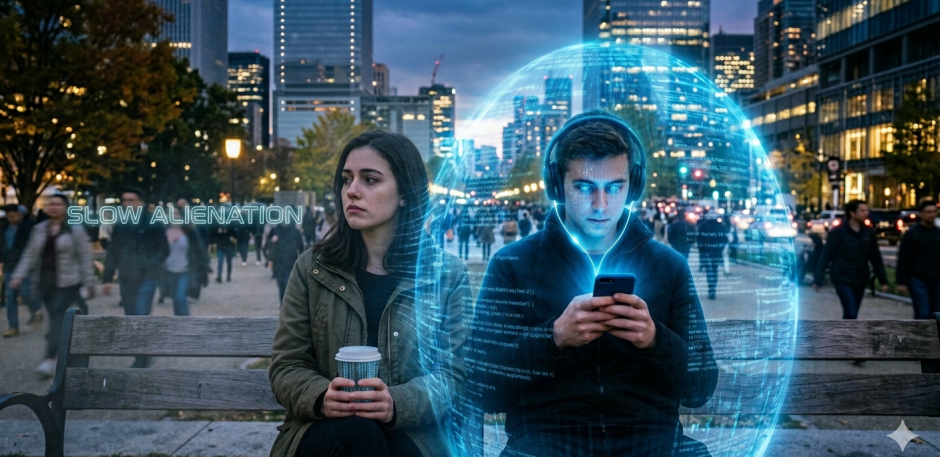
The Hidden Side of the Suburban Dream
For decades, suburbs have represented the ideal vision of success. Quiet streets, spacious homes, private gardens, low crime rates, and good schools have attracted millions of families seeking a better quality of life.
Compared to crowded urban centers, suburban neighborhoods appear to offer everything needed for comfort and happiness.
Yet beneath this image of tranquility lies an increasingly discussed social reality: many suburban residents experience profound loneliness and social disconnection.
How can places designed for family life and community end up making people feel isolated?
The answer lies in the way modern suburbs are built, how people live within them, and how convenience has gradually replaced connection.
The Loneliness Paradox of Suburban Living
At first glance, loneliness seems like an urban problem.
Cities are fast-paced, competitive, and often anonymous. Suburbs, by contrast, appear peaceful and community-oriented.
However, loneliness is not determined by population density. It is determined by the quality and frequency of human interaction.
A person can feel connected in a busy city and isolated in a quiet suburb.
This is the suburban loneliness paradox: people move to suburbs seeking a better life, only to discover that comfort and privacy can sometimes reduce opportunities for meaningful social connection.
Designed for Privacy, Not Interaction
One of the defining characteristics of modern suburbs is privacy.
Large lots, fenced properties, private backyards, and detached homes create personal space and independence.
These features are appealing for many reasons.
However, they also reduce casual social interaction.
In older neighborhoods, people often spent time on front porches, walked frequently, and interacted naturally with neighbors. Today’s suburban design increasingly encourages residents to remain within private spaces.
The more isolated daily life becomes, the fewer opportunities there are to build relationships.
Over time, neighbors become familiar faces rather than meaningful connections.
The Garage-to-Living-Room Lifestyle
Modern suburban life often follows a predictable pattern.
People drive to work, return home, enter through automatic garage doors, and spend the rest of the evening indoors.
Many days involve very little interaction with the surrounding neighborhood.
Unlike walkable urban areas where residents regularly encounter one another, suburban environments are frequently built around cars.
As a result, everyday opportunities for spontaneous conversation are reduced.
Residents may live on the same street for years without truly getting to know each other.
This physical separation gradually creates emotional distance.
Technology Has Made Isolation Easier
Technology has transformed suburban living.
Today, residents can order groceries, stream entertainment, work remotely, exercise at home, and communicate digitally without leaving their property.
These conveniences save time and increase comfort.
However, they also eliminate many social experiences that once occurred naturally.
A trip to the store used to involve brief interactions with employees, neighbors, and community members.
Working in an office created friendships and informal conversations.
Local activities provided opportunities for social engagement.
Now, many of these interactions happen online—or not at all.
The result is a lifestyle that feels connected digitally but disconnected socially.
When Community Spaces Disappear
Strong communities require shared spaces.
Parks, local cafés, libraries, recreation centers, and public gathering places allow people to meet, interact, and form relationships.
Many modern suburban developments lack these natural social hubs.
Instead, neighborhoods often consist primarily of residential housing connected by roads and parking spaces.
Without accessible gathering places, opportunities for community building become limited.
People have homes but fewer places to belong.
And belonging is one of the most important defenses against loneliness.
The Impact on Mental Well-Being
Loneliness is more than an emotional experience—it can affect physical and mental health.
Studies consistently associate chronic loneliness with:
- Increased stress
- Anxiety and depression
- Reduced life satisfaction
- Lower emotional resilience
- Greater risk of social withdrawal
The challenge is that suburban loneliness often develops gradually.
Many residents do not immediately recognize it because their lives appear comfortable and successful from the outside.
The absence of social conflict can disguise the absence of social connection.
Yet human well-being depends on more than comfort.
It depends on relationships.
Families Are Not Immune
Many people assume loneliness primarily affects individuals living alone.
In reality, even families in suburban neighborhoods can experience social isolation.
Parents may become disconnected from broader social networks due to busy schedules and long commutes.
Children may spend more time online than outdoors.
Older adults may struggle after retirement if they lack strong community ties.
Without active efforts to build local relationships, entire households can become socially isolated despite living among hundreds of neighbors.
Why Convenience Cannot Replace Connection
Modern suburban life excels at delivering convenience.
Homes are larger. Technology is smarter. Services are faster.
But convenience solves practical problems—it does not satisfy emotional needs.
People need:
- Friendship
- Belonging
- Trust
- Shared experiences
- Meaningful conversation
These things cannot be delivered by apps, subscriptions, or smart devices.
They emerge through participation in communities and relationships.
The more society prioritizes convenience alone, the greater the risk of loneliness.
How to Escape the Suburban Loneliness Trap
The good news is that loneliness is not an inevitable part of suburban living.
Residents can create stronger connections through intentional action.
Practical steps include:
- Introducing yourself to neighbors
- Participating in local events
- Joining clubs, organizations, or volunteer groups
- Spending time in public spaces
- Supporting local businesses
- Walking through the neighborhood regularly
- Hosting gatherings and social activities
Even small interactions can evolve into meaningful relationships over time.
The key is engagement.
Community does not happen automatically—it is built through participation.
The Future of Suburban Communities
As concerns about loneliness continue to grow, urban planners and community leaders are rethinking suburban design.
Future neighborhoods may place greater emphasis on:
- Walkability
- Shared green spaces
- Mixed-use development
- Community centers
- Social gathering areas
- Local events and activities
The goal is not to eliminate privacy but to balance privacy with opportunities for connection.
The healthiest suburbs will likely be those that combine comfort with community.