Bigger Houses, Smaller Lives?
For decades, the suburban dream has been sold as the ultimate symbol of success. A spacious house, a manicured lawn, a private garage, and a peaceful neighborhood away from the noise of the city—these have long represented achievement, security, and comfort.
Today, that dream is larger than ever.
Modern suburban homes boast home theaters, private gyms, smart automation systems, swimming pools, dedicated offices, and entertainment spaces that previous generations could scarcely imagine. Yet despite all these luxuries, an uncomfortable question is emerging:
What happens when a home becomes so self-sufficient that it no longer requires us to engage with the outside world?
For many homeowners, the answer is surprising. The dream home they worked so hard to acquire can gradually transform into a silent prison—comfortable, secure, and isolated.
The Evolution of the Suburban Dream
The original appeal of suburbia was simple. Families sought safer neighborhoods, larger living spaces, and stronger communities than crowded urban centers could provide.
In earlier decades, suburban life revolved around community interaction. Children played outside together. Neighbors gathered on front porches. Local schools, parks, and businesses served as social hubs.
Today, however, many suburban developments are designed around privacy rather than connection.
High fences, enclosed backyards, private amenities, and digital services allow residents to meet nearly every need without stepping beyond their property line. The result is a lifestyle centered on individual comfort rather than shared experience.
The Rise of the Self-Contained Home
Modern luxury homes are increasingly designed to eliminate inconvenience.
Why go to the gym when you have one downstairs?
Why visit a movie theater when your home includes a private cinema?
Why shop locally when groceries arrive at your doorstep?
Why socialize outdoors when entertainment is available in every room?
Each feature offers undeniable benefits. Yet together they create an environment where leaving home becomes optional rather than necessary.
Over time, this convenience can quietly reduce opportunities for spontaneous social interaction—the small encounters that help build friendships, trust, and a sense of belonging.
Surrounded by Neighbors, Unknown to Them
One of the strangest realities of modern suburban life is that many residents know less about their neighbors than previous generations did.
People may live side by side for years without developing meaningful relationships.
Automatic garage doors open and close within seconds. Residents drive directly into their homes without walking through the neighborhood. Deliveries arrive contact-free. Communication increasingly happens online rather than face-to-face.
The physical distance between neighbors has not increased.
The social distance has.
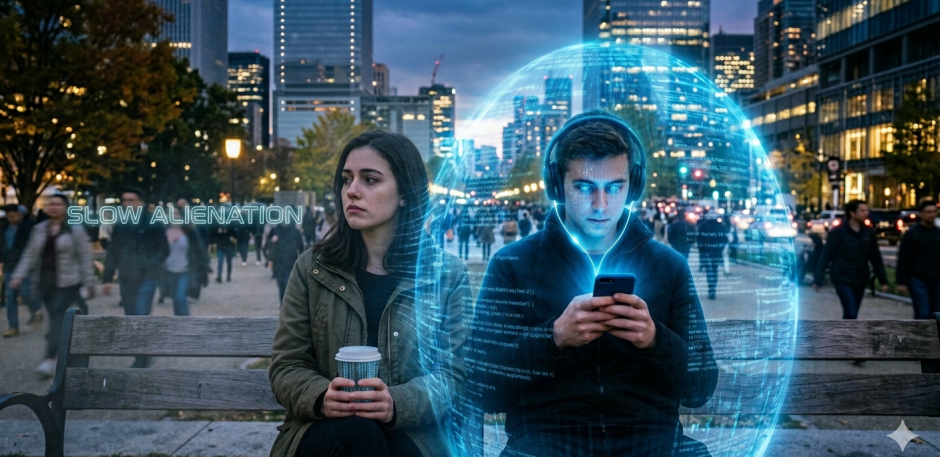
In many suburban communities, residents experience a paradoxical form of isolation: they are surrounded by people yet remain disconnected from them.
Comfort Is Replacing Community
Modern suburban living often prioritizes convenience over participation.
Community centers are replaced by private recreation rooms.
Public gathering spaces compete with personalized entertainment systems.
Neighborhood interaction gives way to digital engagement.
As homes become more luxurious, the incentives to leave them diminish.
This shift may seem harmless at first, but community is built through repeated interaction. When those interactions disappear, so does the sense of collective belonging that makes neighborhoods feel alive.
The consequence is not simply solitude—it is social fragmentation.
The Psychological Cost of Isolation
Humans are social beings by nature.
While privacy and personal space are important, meaningful relationships remain essential for emotional well-being.
Research consistently links prolonged social isolation with:
- Increased stress and anxiety
- Higher rates of depression
- Reduced life satisfaction
- Poorer physical health
- Greater feelings of loneliness
The irony is striking. Many individuals achieve the financial success necessary to purchase their dream home only to discover that material comfort alone does not create fulfillment.
A larger house can provide more space, but it cannot automatically provide connection.
Technology’s Role in Suburban Oblivion
Technology has amplified the self-contained lifestyle.
Smart homes automate daily tasks. Streaming services provide endless entertainment. Food delivery apps eliminate shopping trips. Remote work reduces commuting. Social media creates virtual interaction that often replaces in-person engagement.
Collectively, these innovations make isolation easier than ever before.
The issue is not technology itself. These tools improve efficiency and convenience in countless ways.
The challenge arises when technology replaces community instead of supporting it.
A neighborhood where everyone is digitally connected but socially absent risks becoming a collection of isolated individuals rather than a functioning community.
The Hidden Meaning of “Suburban Oblivion”
Suburban oblivion is not a physical place.
It is a condition.
It occurs when comfort becomes so complete that people gradually lose awareness of the communities around them. Life becomes confined to private spaces, personal routines, and digital interactions.
The outside world continues to exist, but participation in it slowly fades.
The neighborhood becomes a backdrop rather than a community.
The home becomes a sanctuary—but also a boundary.
And without realizing it, residents can drift into a lifestyle defined by convenience but marked by disconnection.
Reclaiming Human Connection
The solution is not to abandon suburban living or reject modern comforts.
Luxury, convenience, and technology are not the enemy.
The key is intentional balance.
Homeowners can strengthen social bonds by:
- Spending time in shared community spaces
- Walking through neighborhoods regularly
- Participating in local events
- Supporting nearby businesses
- Building relationships with neighbors
- Hosting gatherings and social activities
- Prioritizing face-to-face interactions
Communities thrive when people actively contribute to them.
Even small efforts can transform a neighborhood from a collection of houses into a network of relationships.