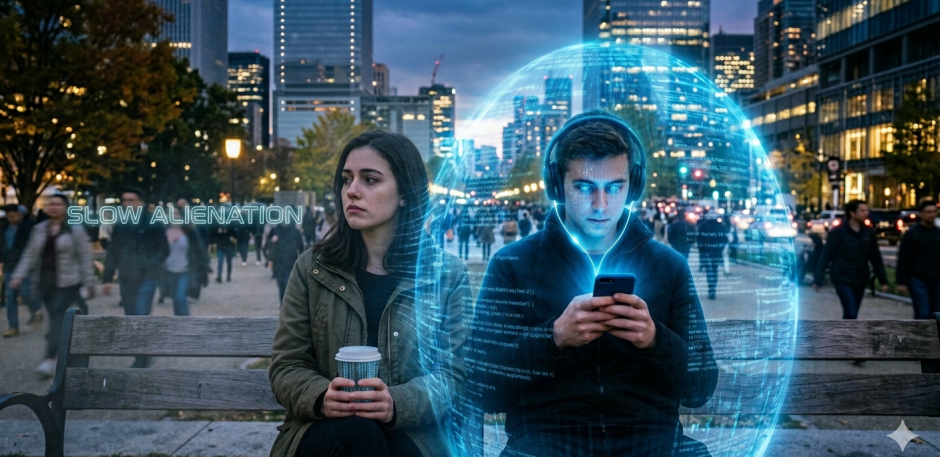
When Structure Becomes a Cage Instead of Support
Routines are often praised as the backbone of productivity and stability. A well-structured day helps people stay focused, reduce stress, and maintain control over their responsibilities. Morning rituals, scheduled work blocks, meal planning, and disciplined habits are frequently associated with success and mental clarity.
But there is a lesser-known side to extreme structure.
When routines become too rigid, too repetitive, and too emotionally disconnected from life outside of obligations, they can quietly shift from helpful organization into a form of permanent isolation.
This is where structure stops supporting life—and starts replacing it.
And in that replacement, a hidden form of depression can begin to grow.
What Is Permanent Isolation?
Permanent isolation does not always mean physical solitude.
Instead, it describes a psychological state where a person’s life becomes so structured and predictable that emotional variety, social spontaneity, and meaningful engagement slowly disappear.
People experiencing this may:
- Follow strict daily schedules with little variation
- Avoid spontaneous social interaction
- Prioritize productivity over connection
- Repeat the same environments, routes, and routines
- Feel emotionally “flat” despite being functional
On the surface, life appears stable.
Internally, it can feel increasingly empty.
The Hidden Link Between Routine and Emotional Numbness
Routines are designed to reduce uncertainty. They create order in chaotic environments and help conserve mental energy.
However, when routines become overly rigid, they can reduce the brain’s exposure to novelty—one of the key drivers of emotional engagement.
Human psychology thrives on variation:
- New experiences stimulate motivation
- Social interactions create emotional resonance
- Unexpected events generate meaning and memory
- Flexibility encourages adaptability and curiosity
When these elements are minimized for long periods, emotional responsiveness can weaken.
Life becomes efficient—but less emotionally alive.
Why Overly Structured Lives Can Feel Empty
A strictly organized lifestyle can unintentionally remove the “friction” that creates human connection.
For example:
- Working from home every day reduces casual social encounters
- Strict schedules leave little room for spontaneous meetings
- Repetitive environments limit new emotional stimuli
- Digital communication replaces in-person interaction
While none of these are inherently harmful, their combination can gradually shrink a person’s emotional world.
Over time, life may begin to feel like a loop rather than an experience.
The Psychology of “Functional but Disconnected”
One of the most confusing aspects of hidden depression is that people often remain highly functional.
They may:
- Complete tasks efficiently
- Maintain careers and responsibilities
- Follow routines consistently
- Appear stable from the outside
Yet internally, they may experience:
- Emotional flatness
- Lack of excitement or anticipation
- Reduced interest in social life
- Feeling “stuck” or on autopilot
- Difficulty experiencing joy
This is sometimes described as emotional disconnection within functionality—when life continues to operate smoothly, but without emotional depth.
Why Routine Alone Cannot Sustain Mental Health
Routine is a tool, not a complete emotional system.
It provides:
- Predictability
- Stability
- Time management
- Reduced cognitive overload
But it does not inherently provide:
- Meaningful relationships
- Emotional stimulation
- Social belonging
- Novel experiences
- Psychological renewal
When routine dominates without balance, emotional needs can go unmet—even if practical needs are fully satisfied.
The Role of Social Isolation Inside Routine
Highly structured lifestyles often reduce unplanned social contact.
This includes:
- Casual conversations during commutes
- Spontaneous workplace interactions
- Community participation
- Informal gatherings
- Everyday social unpredictability
These interactions may seem minor, but they play a major role in emotional health.
They remind individuals that they are part of a living, responsive social environment.
Without them, routine can become isolating even in busy or populated settings.
The Brain’s Need for Variation and Connection
Human brains are wired to respond to change and connection.
When life becomes too predictable, the brain receives fewer emotional “signals” that contribute to motivation and engagement.
Over time, this can contribute to:
- Reduced dopamine response to daily activities
- Decreased curiosity and motivation
- Emotional fatigue or numbness
- Lowered sense of meaning in daily life
This is not a failure of discipline—it is a natural response to low stimulation environments.
When Productivity Replaces Presence
One of the key risks of rigid routines is that productivity can become a substitute for presence.
People may become focused on:
- Checking tasks off lists
- Maintaining strict schedules
- Optimizing efficiency
- Avoiding “unproductive” time
But unstructured time is often where emotional life develops.
It is in pauses, conversations, and spontaneous moments that people reconnect with themselves and others.
Without these spaces, life can feel overly mechanical.
Why Hidden Depression Is Hard to Recognize
Hidden depression in structured lifestyles is often difficult to identify because there is no visible collapse in function.
Instead, it appears as:
- Subtle dissatisfaction
- Reduced emotional intensity
- A sense of routine fatigue
- Lack of excitement about the future
- Feeling “fine but not fulfilled”
Because daily life continues smoothly, the emotional cost is often overlooked or dismissed.
This makes awareness especially important.
Restoring Emotional Balance Without Losing Structure
The solution is not to abandon routines entirely.
Structure is valuable and often necessary for stability and success.
The key is introducing flexibility and emotional variety back into daily life.
This can include:
- Allowing unplanned time in the schedule
- Introducing new environments or activities
- Prioritizing face-to-face social interactions
- Engaging in hobbies outside productivity goals
- Taking breaks from digital routines
- Saying yes to spontaneous opportunities
Small disruptions to routine can reintroduce emotional vitality.
Reconnecting with a More Human Pace of Life
Modern life often encourages optimization, efficiency, and control.
But emotional health depends on more than structure.
It depends on:
- Unpredictability
- Connection
- Playfulness
- Rest
- Shared experiences
A healthy life rhythm balances discipline with spontaneity.
Too much structure can shrink emotional space.
Balanced structure allows life to remain both stable and meaningful.