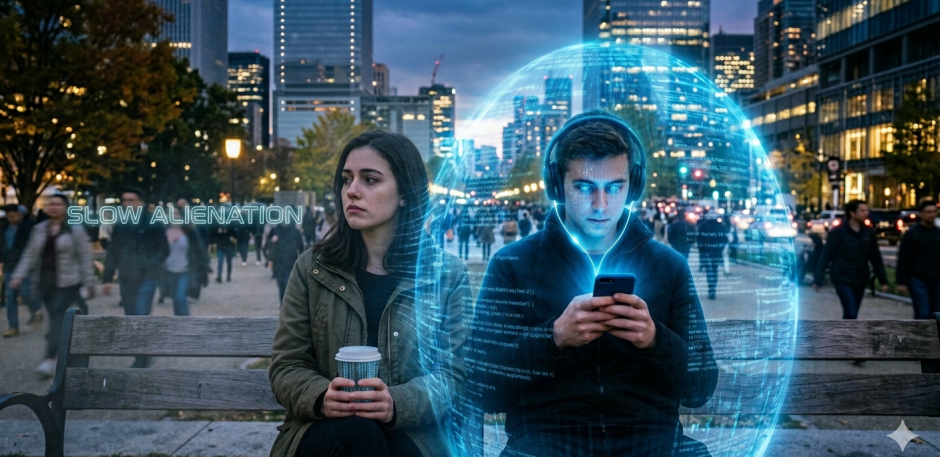
The Hidden Cost of Living Behind Walls
Privacy has become one of the most desirable luxuries of modern life.
From gated communities and high perimeter walls to private gardens and smart security systems, homeowners increasingly seek protection from noise, intrusion, and unwanted attention. In a fast-paced world filled with constant connectivity, having a personal sanctuary seems like the ultimate achievement.
But what happens when the walls we build for protection begin separating us from the people around us?
As neighborhoods become more private and homes more self-contained, many communities are experiencing a subtle but significant social shift. The pursuit of privacy, while valuable, may also be contributing to a growing sense of isolation.
This phenomenon can be described as High Fence Syndrome—a modern lifestyle pattern where increasing privacy gradually reduces human connection, community engagement, and social belonging.
Why Privacy Has Become a Modern Obsession
There are understandable reasons why people value privacy.
Urban density, rising noise levels, security concerns, and the pressures of modern life have led many individuals to prioritize personal space more than ever before.
Today’s homeowners often invest in:
- High perimeter fences
- Gated residential communities
- Private outdoor spaces
- Smart security systems
- Contactless services
- Remote work setups
These features offer comfort, safety, and control over one’s environment.
However, they also reduce opportunities for spontaneous interaction with neighbors and the broader community.
What begins as a practical decision can slowly reshape how people experience daily life.
The Disappearing Neighborhood
Not long ago, neighborhoods functioned as natural social networks.
Children played together outdoors. Neighbors chatted across front yards. People recognized familiar faces during evening walks. Community events and shared public spaces encouraged interaction.
Today, many residential areas look very different.
Tall fences obscure homes from view. Automatic gates limit access. Backyards replace front porches. Residents often enter their garages and disappear indoors without interacting with anyone nearby.
The result is a neighborhood where people live close together physically but remain distant socially.
Community visibility declines, and with it, many opportunities for connection.
When Safety Becomes Separation
Security is one of the strongest motivations behind modern residential design.
Families naturally want to protect their homes and loved ones. High fences, surveillance systems, and controlled-access communities can provide peace of mind.
Yet there is a paradox at play.
Historically, one of the strongest forms of neighborhood security was social familiarity. People knew their neighbors, recognized unusual activity, and looked out for one another.
As communities become more isolated, that social awareness often weakens.
Residents may feel protected by physical barriers while simultaneously losing the social bonds that contribute to a resilient community.
In other words, stronger walls do not always create stronger neighborhoods.
The Psychology of Invisible Isolation
Isolation rarely happens overnight.
It develops gradually.
A homeowner spends more time indoors. Deliveries replace shopping trips. Entertainment shifts to streaming platforms. Remote work reduces commuting and workplace interactions.
At the same time, physical barriers limit casual encounters with neighbors.
None of these changes seem significant individually.
Collectively, however, they reduce the frequency of everyday human interaction.
Over months and years, people may discover they know fewer neighbors, participate less in community life, and feel increasingly disconnected from the environment around them.
This is the essence of High Fence Syndrome: isolation that emerges not from exclusion but from excessive separation.
The Role of Modern Technology
Technology has amplified this trend.
Today, homeowners can manage nearly every aspect of life without leaving their property.
Food arrives through delivery apps. Packages appear at the doorstep. Smart devices automate household tasks. Virtual meetings replace office interactions. Entertainment streams endlessly from home.
These innovations save time and increase convenience.
Yet they also reduce the need to engage with local communities.
Technology is not inherently harmful. The challenge arises when convenience consistently replaces opportunities for meaningful human connection.
The more self-sufficient our homes become, the easier it becomes to live within a personal bubble.
Why Human Connection Still Matters
Humans are inherently social creatures.
Regardless of personality type, people benefit from belonging to a community and maintaining meaningful relationships.
Research consistently links strong social connections to:
- Better mental health
- Greater life satisfaction
- Lower stress levels
- Increased resilience during difficult times
- Improved physical well-being
Conversely, prolonged social isolation is associated with loneliness, anxiety, depression, and reduced quality of life.
A private home can provide comfort, but it cannot fully replace the emotional value of human relationships.
Finding the Balance Between Privacy and Community
The solution is not eliminating privacy.
Privacy remains essential for personal well-being, safety, and peace of mind.
The challenge is finding a healthy balance between private space and social connection.
Homeowners can maintain privacy while strengthening community ties by:
- Greeting neighbors regularly
- Participating in local events
- Taking walks through the neighborhood
- Supporting local businesses
- Hosting occasional gatherings
- Using shared community spaces
- Building relationships beyond digital interactions
Small actions can have a significant impact on rebuilding a sense of belonging.
Designing Communities for Connection
Urban planners, architects, and developers also play an important role.
Neighborhoods that encourage interaction often include:
- Walkable streets
- Public parks
- Community centers
- Shared recreational spaces
- Pedestrian-friendly design
- Accessible gathering areas
These features create opportunities for residents to meet naturally without sacrificing privacy.
The most successful communities are not those with the highest walls but those that balance security with social engagement.